It Was Never About the Laughter
In the early days of Laughter On Call people would question the unlikely link between laughter and Alzheimer’s. I would explain that laughter was the aspiration, but the real goal was breaking through feelings of isolation. Laughter was a tool, one of the best, for creating connection and engaging people in all stages of cognition.
As is my instinct after saying anything potentially pretentious, I would often tag that statement with a little joke, “After all, I couldn't call the company “Cognitive Engagement On Call. I mean I could, but no one’s excited about that company.” Also, the “on call” phrasing doesn’t have the same ring. Oh the wordplay!
Nevertheless, my focus on generating laughter in the case of Alzheimer’s was always about getting the light back in a person’s eyes. And my instincts about laughter and better aging were spot on as this recent study reported.
Initially, we were committed to pulling folks out of the isolation they feel having a brain that is no longer connecting the dots. Even when the dots are people you knew and places you’d been. Any silly behavior that reconnects the dots is fair game - beyond game - it is to be encouraged with abandon.
Then COVID hit.
To my surprise, very quickly I was no longer speaking only to people in the Alzheimer's community...
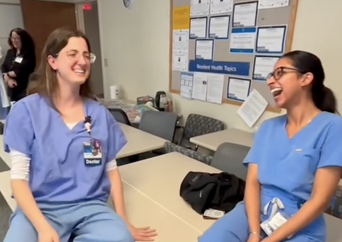
Almost overnight, it became clear that isolation was not the exclusive domain of people living with dementia. Suddenly, everyone was experiencing some version of disconnection. Since I had seen firsthand how shared laughter could help people feel less alone, I launched virtual interactive meetings, open to the public, using it as an opportunity to help and to get on my laughter soapbox! I opened each session reminding participants of the power of sharing laughter together for connection, even on ZOOM.
People from every walk of life showed up: anxious HR leaders, overwhelmed managers, exhausted healthcare workers, teachers trying to hold classrooms together, nonprofit CEOs, married couples, parents of surly teenagers, caregivers, and even guilt-ridden daughters caring for mothers they loved and struggled with in equal measure.
All kinds of humans.
For four years, I had the privilege of talking with people about the physical and emotional benefits of laughing together, and watching the impact it can have in real time.
We're five years out from the pandemic, but one thing remains clear: the audience for these "wacky" ideas about laughter and connection has grown considerably. At Laughter On Call, we still spend a lot of time preaching the gospel of laughter to the unconverted.
Which is why I get excited whenever new research validates what we've seen for years.
-
This study directly links laughter with better aging.
-
This report is even more exciting - coming out of Sydney - focusing on my favorite type of humor - Affiliative - the kind that brings people together rather than pushing them apart.
-
And here’s a study that takes laughter seriously enough to recommend it to Veterans.
And finally:
- Adam Grant’s recent piece in the NY Times - Citing research from Atlassian. The study found that a thoughtfully designed quarterly team gathering creates more connection and belonging than a daily commute to an office.
That finding made me smile.
Not just because Adam Grant is one of the leading voices on workplace motivation and leadership, but because it reinforces something we've believed all along: connection and belonging are foundational to well-being, engagement, and performance.
And laughter?
It's one of the fastest ways to get there.
Ready to get your dose of laughter?
Discover how Laughter On Call can bring more connection to your team, family, or caregivers.
Read More Stories