Let's Talk About Self-Deprecation
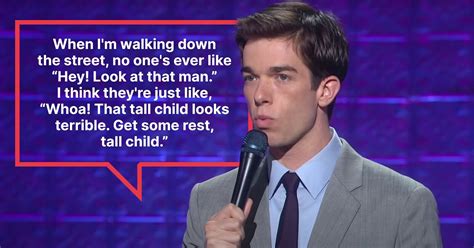
Self-deprecation: deliberately diminishing your expertise, competence, or authority to make other people comfortable.
Maybe you’re a born leader who wakes up with no self-doubt, no need to justify why you are addressing a crowd or holding court with your genius even if it's a courtroom of one. If so, what I’m about to talk about here will likely not be of interest. For the record this is not me being self-deprecating although it could be! My impulse to use this comedy tool is the termite of my character challenges. Even after thirty years of teaching, speaking and performing in front of large crowds, it refuses to die.
On the off chance that I am not the only one who needs support in teasing out the appropriate use of self-deprecation offstage, I am going to press on here!
It’s an interesting challenge to talk about the fine art of self-deprecation. On draft five of this I keep asking, how do I do it without breaking my own hard and fast rule about how to use it outside of a comedy club without undermining your credibility?
Here’s the big rule: never make jokes about the thing you’re hired to do.
No laugh is worth undermining your expertise.
Letting people know you have a sense of humor about yourself can be a great way to break the ice, bring some humanity into the room, and help people lower their guard.
The trick is knowing the difference between bringing humanity into the room and not making yourself smaller in the process.
Best bet? Laugh about some of your quirks. For example, adjusting to something new in your life - a house, a pet, a route to work, a TV remote. You can tell a quick story about an awkward moment. You can admit you don’t know something as long as, and this is key, it’s not about the topic you are there to be an expert at. (Right there I want to make a joke about ending a sentence with a preposition. But I won’t because that would undermine me as a writer.)
When it comes to the subject you are there to share —to lead, teach, advise, perform, sell, operate, consult, or speak—do not make yourself the punchline.
Here are some classic self-deprecation traps:
1. No one is paying attention.
You’re addressing a crowd, or even one person. They don’t seem to be listening. Rather than simply asking, “Is this a bad time?” you say:
“I guess I can’t compete with dancing cats on TikTok!”
Funny? Maybe.
Helpful? Definitely not.
You’ve just positioned yourself as less interesting than an AI cat on their phone. And now there’s awkward silence while everyone figures out how to respond.
Better to ask a question of the person. “Is this a good time?” Or simply pause. It’s amazing the power of not talking to get someone’s attention.
Because we don't need to compete with TikTok. We need to trust what we came there to say. (I’m aware I switched to “we,” there. Because even after thirty years out in the field I can never hear this too much.)
2. You’re speaking to a group of professionals in a field in which you are not an expert. They appear to be staring blankly.
Maybe it’s just me, but I suspect there are others out there who are sensitive to a crowd. Probably not as sensitive as a comic, but worth addressing.
You have a moment where you wonder if what you are saying is landing. On impulse you decide to qualify your wisdom with a sentence that starts with,
“I’m no…FILL IN THE BLANK,(ie Surgeon General, Tech Wiz, etc.), but I promise you what I am sharing here is relevant and will help you.”
If at any time you want to start a sentence with “I’m no…” STOP. Before you finish it.
You don't need to establish what you aren't.
Establish what you are.
Instead try: “Here’s what I do know…”
And then tell them something you know.
3. Someone challenges you in front of the group.
You’re running a staff meeting and someone points out an inconsistent policy, a change in approach, or something you got wrong.
For those with a comic instinct, there is a powerful temptation to deflect with a joke:
“Well, I’m dancing as fast as I can - as we said back in my day.”
To make yourself the butt of the joke before anyone else can.
But often the most confident response is also the least funny:
“Thanks for pointing that out.”
Then answer the question.
If you feel defensive, or caught off guard, you don't have to perform your way out of it. Take a breath and say, “I want to give that a thoughtful answer. Let me come back to you.”
Humor can break tension for sure. It can open up communication and lower the temperature in heated situations. You just can’t lower your credibility in the process.
Once again, I have proven that analyzing the use of comedy and comedians’ tools is helpful but also very not funny.
Which comes dangerously close to breaking my own rule about self-deprecating, except in this case it’s not about me, it’s just true!
Ready to get your dose of laughter?
Discover how Laughter On Call can bring more connection to your team, family, or caregivers.
Read More Stories