Art for Alzheimer's and The Rest of Us
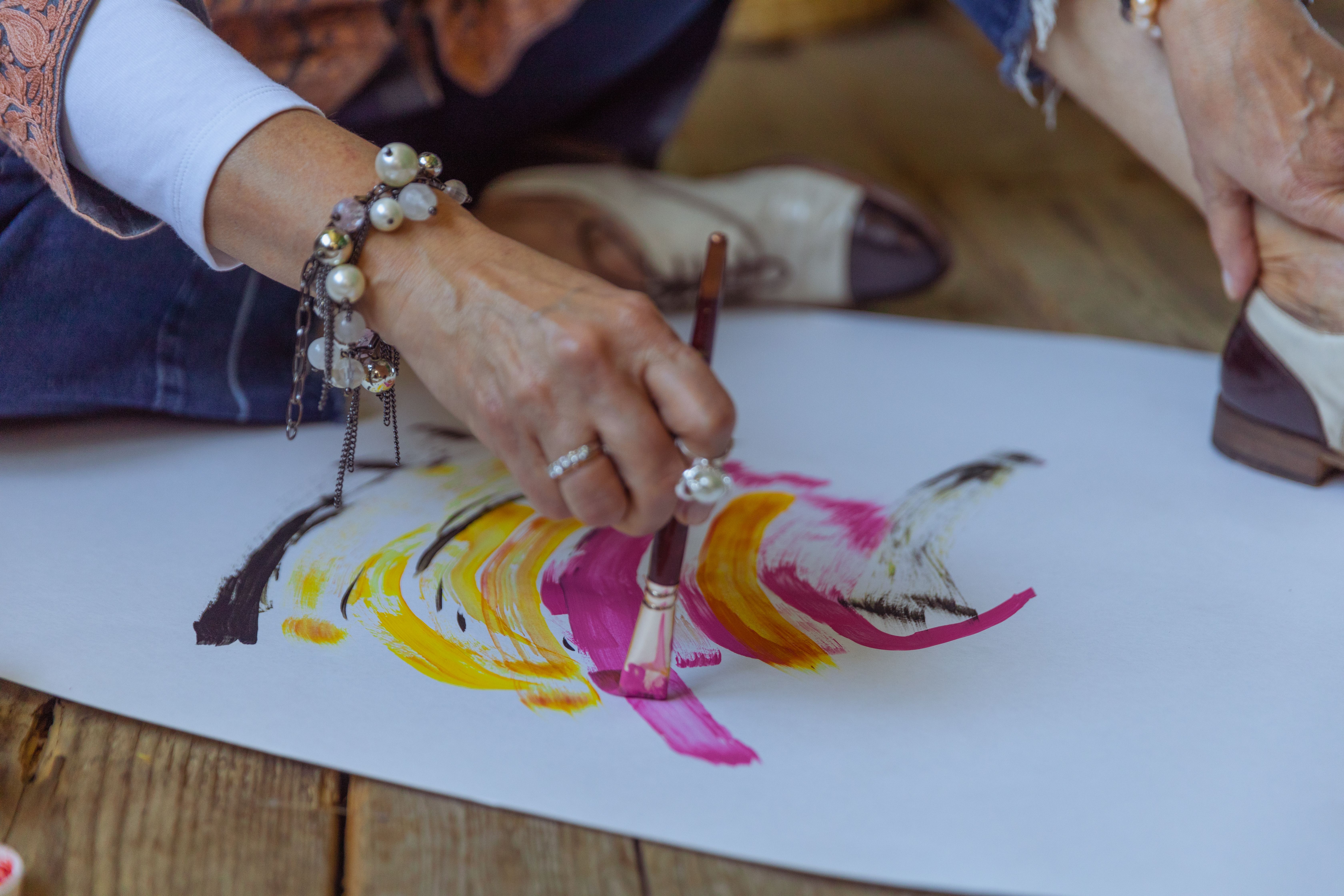
Fact: Making Art Relieves Anxiety.
And Humor Counts!
Over the last few weeks, I’ve been crisscrossing the U.S., speaking to healthcare teams working with everyone from cancer patients to people living with Alzheimer’s.
Sometimes I feel like a soapbox speaker in early-1900s Hyde Park. I don’t literally show up with a soapbox, but I may as well. That’s how much I believe in what I’m talking about.
As I like to say, cancer and Alzheimer’s aren’t exactly experiences that make people think, Gee, I should really be laughing right now. At least not outside of healthcare. For the most part, people in the trenches know that a sense of humor is actually the secret sauce for getting through some of the hardest challenges.
What I didn’t know until recently were the studies cited in the New York Times showing that engaging with art can “relieve anxiety and improve mood, self-esteem and focus.” I’m putting humor and dance in the art bucket, too.
In her piece about helping her father write his memoir as he faces cognitive decline, writer Rebecca Barry makes two points that echo what I tell anyone who will listen about showing up for the people we love. Especially when they’re losing their cognitive abilities.
After intentionally making time to gather, recount, write, and edit her father’s life stories, Barry writes a line that has me nodding like a bobblehead:
“I will never get over the gift of this time.”
Since my own father died in 1996, I’ve rarely heard anyone say, “I wish I hadn’t spent time with [someone they loved] when they were sick.”
But I’ve counseled countless people, including memoir students ranging in age from 85 to 97, who regret not showing up for their parents. To carry that regret into your ninth decade feels very, very heavy.
And often, it’s avoidable. Most of the time, showing up is worth the effort.
I’m not talking about abusive relationships or situations where there’s so much unresolved sh*t that spending time together wouldn’t help either person. I’m talking about being able to show up for someone in spite of how devastating it is to watch them lose their mind. So much so, that you keep putting off a visit until it’s too late.
You don’t have to stay for three hours. You don’t even have to stay for one. And throwing in some art can help. Music, drawing, writing, any of this can create a connection through memory loss.
Barry offers a different way to think about these visits:
“Don’t do it because the person is leaving. Do it because you love the person and enjoy being in the same room. Do it because you are tired of having your entire relationship consist of what you are losing.”
And when it comes to engaging with some kind of art together, whether that means writing memoirs, making crafts, or sharing funny stories, she offers this:
“Do it because the process of making something together can shift your gaze to what you still have.”
I love this reframe so much.
It reminds me of the visits with my mother when I cut her hair. I cherish those memories. Of course, it’s different from writing a book together, making a collage, or painting watercolors. But, as Barry suggests, working toward something together can help us feel connected even when language is gone.
I loved clipping a few wisps here and there, then holding up the mirror so my mother could see herself. No words needed.
A shared moment. A shared purpose. A little bit of art.
Sometimes, that’s all it takes to bring us back to what we have, right here, right now.
And to create a memory we’ll carry forever.
Ready to get your dose of laughter?
Discover how Laughter On Call can bring more connection to your team, family, or caregivers.
Read More Stories