Fran Drescher, Brain Health, and the Case for Hope
On my father’s deathbed 30 years ago, one of the few things that could still make him laugh was Fran Drescher’s voice on The Nanny.
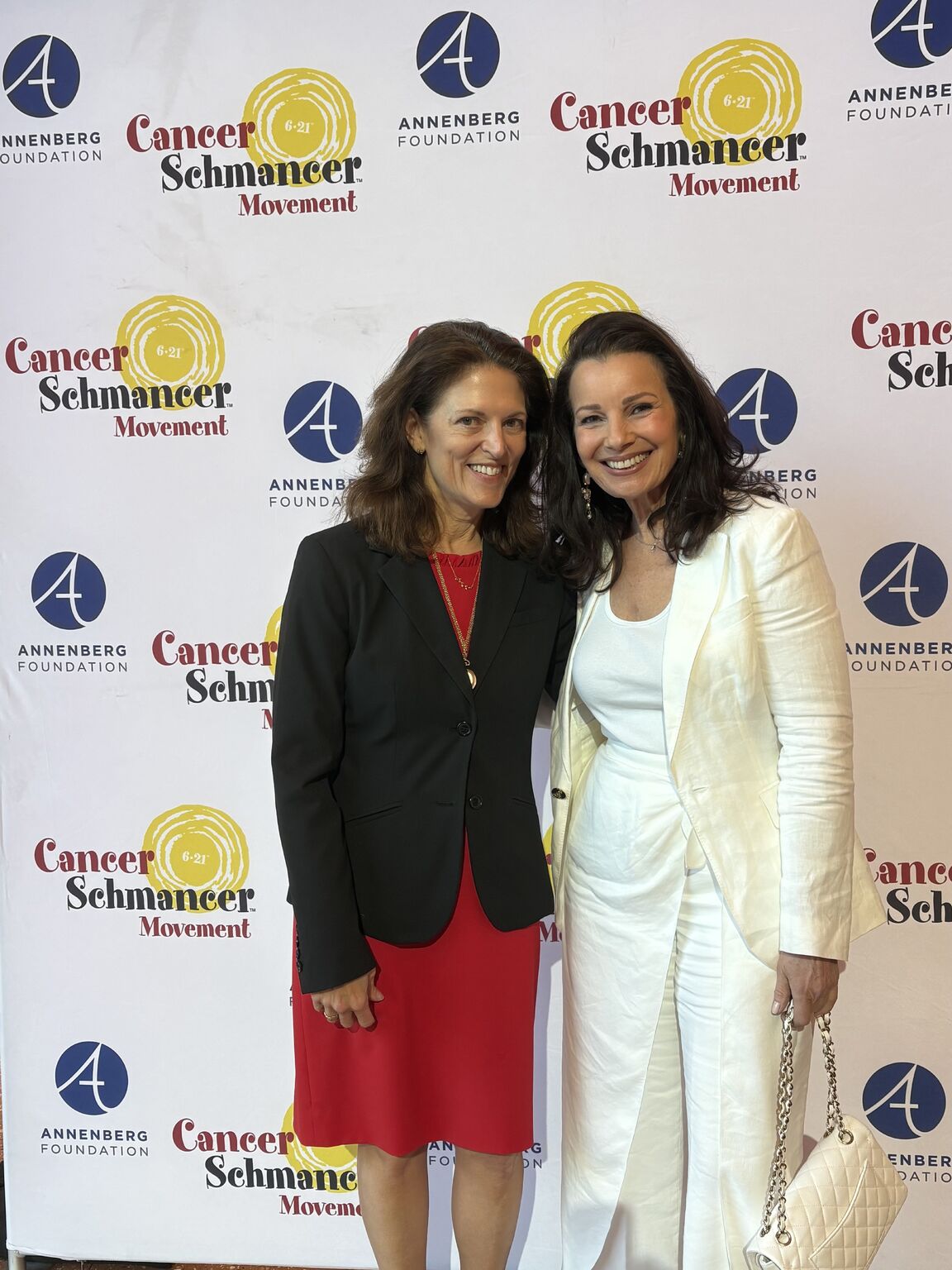
So imagine my thrill when I had the chance to tell her this in person last Saturday.
Ms. Drescher was hosting a Master Class Brain Health Summit dedicated to the prevention and, in some cases, potential reversal of cognitive decline associated with Alzheimer’s disease.
Turns out my father had great taste. Not only is she beautiful, charming, warm, and quick-witted, she’s also passionate about helping us live our healthiest lives.
Some of you may be familiar with the increasingly popular term “healthspan.” It’s become the go-to aspiration in longevity circles, and for good reason. According to the World Health Organization, the number of people aged 80 or older is expected to triple between 2020 and 2050, reaching 426 million.
That’s nice. Except if during these bonus years you’re sick, losing your eyesight, your hearing or your mind?
Hence the growing obsession with not just living longer, but living better.
And Fran Drescher is on a mission.
After choosing not to run again after her service as president of SAG-AFTRA, she’s now using her considerable influence to educate people about preserving brain health. Saturday’s impressive lineup included Dr. Dale Bredesen, author of the bestseller The End of Alzheimer’s; Ryan Glatt, a passionate advocate for the role of exercise in brain health; and Tess Bredesen, who specializes in cognitive nutrition.
Before Mr. Glatt, a neuroscientist whose name I unfortunately did not grab a screenshot of, took the stage to share research conducted with colleague Dr. Cyrus Raji. She shared impressive images and studies, including before-and-after brain scans illustrating the impact of lifestyle changes on brain health.
The message throughout the day was consistent: Early detection matters. And what we do every day may have more influence on our cognitive futures than we once believed.
Each speaker presented evidence suggesting that targeted lifestyle interventions may help slow cognitive decline and, in certain circumstances, improve cognitive function. How much these interventions can change the course of Alzheimer's itself is an important area of scientific debate.
But perhaps the biggest shift in messaging was this: An Alzheimer’s diagnosis is not the death knell to our brains that we think. In fact, Ms. Drescher and the others used the word hope.
That word had me put down my organic falafel wrap.
A bit of relevant trivia, when I first launched Laughter On Call, our tagline was “Hope, One Laugh at a Time.”
A few years in, I began to question the integrity of this offer. There was no evidence that making someone laugh could stop the progression of the disease, no matter how often we showed up or how silly and engaging we were willing to be.
I changed the tagline to read, “Laughter On Call: Courage, One Laugh at a Time.”
Because I did believe, and still do, that what it really takes to face all the big illnesses - Alzheimer’s, Parkinson’s, Cancer and the thousands of other terminal ones I can’t list here - is courage. This was something I knew we could help people find.
Let me explain. There are people who when faced with serious illness will say, out loud, when asked about showing up and visiting, “I just want to remember them the way they were.” Um…okay.
But my experience is that there is a whole expanse of people who are simply afraid. They don’t know what to do or what to say so they stall. And stall. And then it’s too late. Which they often regret. By giving people simple tools for what to do,i.e.smile, bring a cookie, play some music, share photos, recall some greatest hits stories - we are providing them with specific crampons, if you will, to scale the mountain of fear they have facing a loved one in decline. And yes, that is the first time I have used the word crampon in a sentence.
Maybe this is where courage and hope intersect. Because there is hope that you will connect with the person if you have the courage to show up.
I'd love to believe Fran Drescher and her master class speakers are right. That in fact, getting uninterrupted sleep, cutting out sugar and alcohol, working out daily with varying types of exercise, and eating organic food will protect me from my mother's fate.
Right now the lifestyle they are prescribing feels like a utopian ideal that many either can’t do or can’t afford, but there is compelling evidence that many lifestyle choices can make a difference in brain health.
And if anyone can convince me to sleep more, give up sugar, and eat organic everything, it's Fran Drescher.
She may even have been able to convince my father’s hot-dog loving palate. And he'd definitely want her to read the Erewhon menu out loud to him.
Ready to get your dose of laughter?
Discover how Laughter On Call can bring more connection to your team, family, or caregivers.
Read More Stories