What Does Dementia Feel Like?
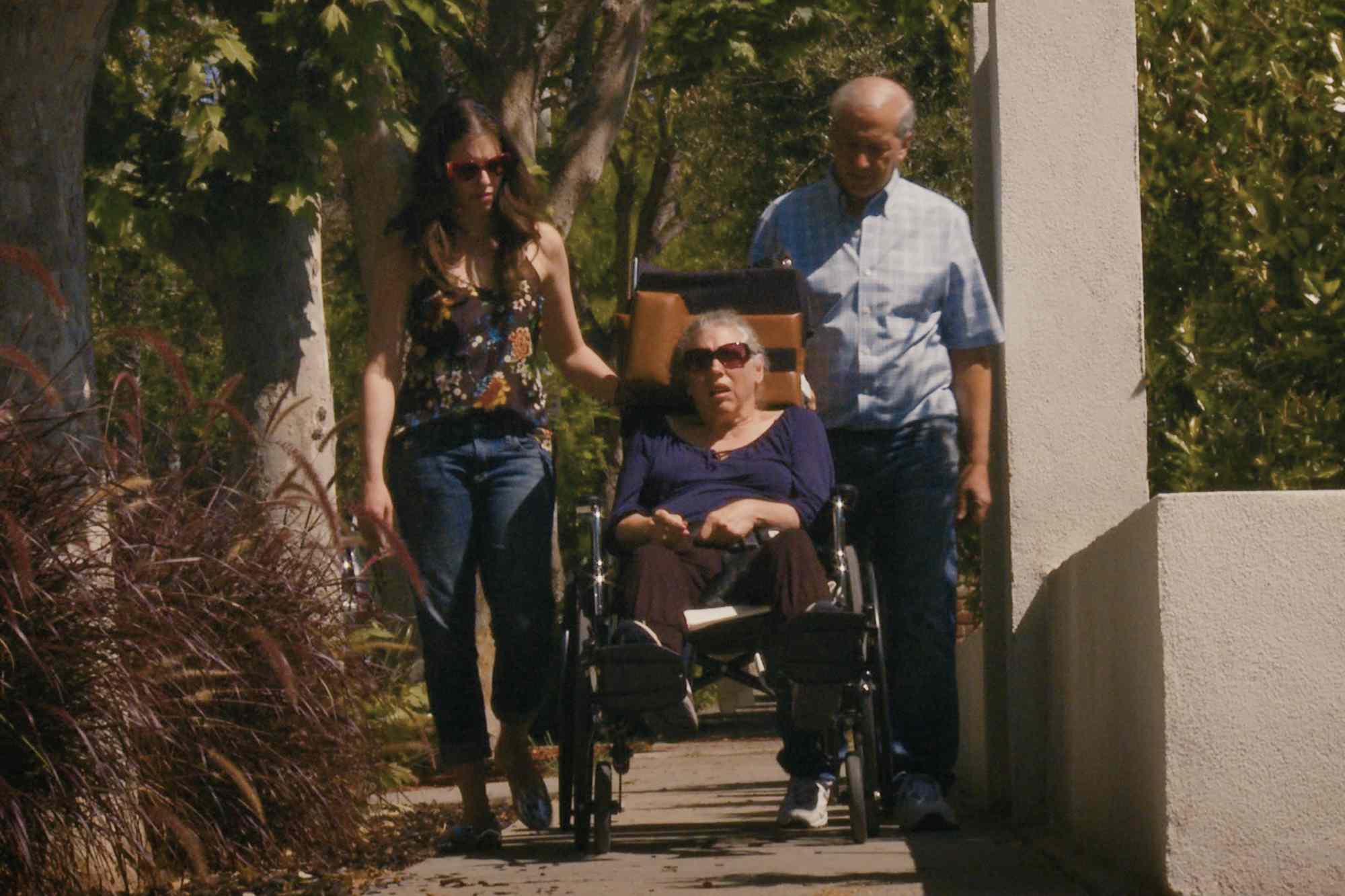
Photo credit People.com
Last week one of my facilitators, Lauren Pritchard sent me a youtube video entitled “A difficult experience trying a dementia simulator: Will you get dementia?” Both of her parents fell victim to dementia, one of the reasons she uses her gift for making people laugh to help. The video segment was created for Channel 5 in the U.K. in January of 2025. In a description of the story, the producers state, “dementia is the UK’s fastest growing health condition.” I did not know this. I also didn’t know the degree to which people’s senses are distorted from the disease. Surprising given that I witnessed the ravages firsthand. The experience for the couple who participated makes it very clear. As many who comment on the episode say, I wish I’d understood more about the aspects the simulation reveals when I was in the thick of it with my mother.
Apparently I could have. ABC did a similar expose in 2012. In this one, there is documentary footage of an aging mother who moves in with her newly married son. It quickly becomes apparent to him and his wife that there is something very wrong with his mother. He agrees to engage in a simulation with news anchor Cynthia McFadden. Together they have what she describes as “12 minutes that changed my life.”
These are not easy segments to watch. Fascinating nevertheless. I find it curious that in both experiments the people are given gloves to wear, dulling the sensation in their fingers. In the ABC one, they even tape a few of the fingers together to give the effect of arthritis, which many are also afflicted with. I was reminded of the way my mother used to hold hands with people - some she barely knew - baffling to me because it was so out of character for her. I wonder now if the dullness of touch made her want to make sure she was connected to another person. It appears she could no longer feel texture but perhaps she could still feel warmth and groundedness by holding hands.
Talk about the opposite of laughter, even writing this my eyes moisten. These experiences also involve other sensory deprivations for the two men and two women who participate - goggles, headphones that muffle sounds and shoes that throw off their balance. The ABC anchor who participated, Cynthia McFadden, is very frustrated by all of the tasks but when the facilitator encourages her to keep going she notes that it makes a difference. That hearing something positive is so valuable, rather than impatience or disappointment. In both experiments, the men are moved to tears when it ends.
If you are going through this currently, I do believe there is value in streaming these short videos. They are not fun, there is no laughter to be had, but there is worthwhile information. Although McFadden’s willingness to speak her mind loudly is definitely compelling. Worth your time, If only to better understand how it is to be inside the disease.
Other heartwrenching and yet inspiring film footage about Alzheimer’s is Taking Care. A documentary directed and produced by Lauren Rogen with her husband Seth. In her film, Lauren uses footage of her mother at various stages of the disease, intercut with a portrayal of a previously vibrant and vital woman. It also reveals Lauren’s inspiration to create and run Hilarity For Charity, a non-profit that has become one of the leaders in raising awareness, particularly for younger people, and offering respite grants for caregivers. They are also committed to supporting brain health and research around prevention and treatment. Full disclosure they are also an LOC fiscal sponsor so that people are able to make donations that enable us to bring our programming to seniors and communities short on resources.
As I said, this is not easy material to engage with but it achieves very valuable results. Insight into the experience, but also a sense that none of us has to go through it alone as caregivers. If you are feeling isolated, here’s a link to the Alzheimer’s Weekly to get started. And a link to Hilarity for Charity. HFC runs free “Virtual Community Lounges” weekly where you learn some tools and can meet other people going through the same experience without leaving your house!
Last but in no way least - in fact most in my humble opinion, reach out to me. Because understanding the disease better helps you appreciate the value of exactly the tools we can share with you to bring comic relief and connection where you least expect it. We can help you. Here’s a link to our senior services page.
Ready to get your dose of laughter?
Discover how Laughter On Call can bring more connection to your team, family, or caregivers.
Read More Stories